


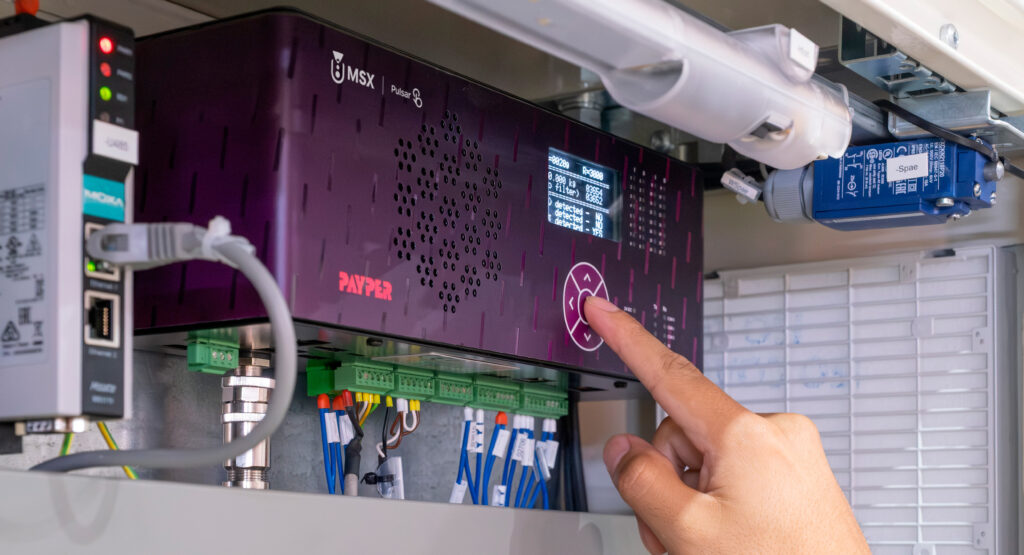
Payper highlights how advanced weighing controllers optimise dynamic dosing in high-speed bagging systems. Real-time algorithms eliminate overfilling and boost productivity.
In high-capacity bagging installations operating at speeds above 2,000 bags per hour, maintaining weighing precision within a few grams requires real-time control of product velocity, flow behaviour, vibrations, and material remaining in flight. To address these variables, Payper has developed proprietary weighing control technologies that integrate electronics, software, and mechanical systems.
Most industrial dosing systems rely on a dual-flow strategy, combining a rapid coarse feeding phase with a fine adjustment stage. Because bulk materials continue moving after the feed closure signal, advanced algorithms must anticipate material behaviour and accurately calculate the in-flight product. This prevents systematic overfilling without requiring long stabilization pauses for impact forces and mechanical vibrations.
Integration between the weighing controller, such as Payper’s MSX system, and an end-of-line checkweigher eliminates unproductive waiting times. By continuously exchanging measurement data while filling proceeds, subsequent cycles are automatically adjusted based on checkweigher feedback. Data indicates that this continuous closed-loop communication can increase overall installation productivity by approximately 5%.
In a practical application at a German petrochemical plant running near 2,200 bags per hour, the MSX technology reduced average weighing deviation from a target tolerance of 10 grams down to 3 grams. This reduction in overfilling resulted in material savings of approximately 14 tonnes per year. Additionally, modern controllers offer stored recipes, operational logs, and remote diagnostics for predictive maintenance.
