
A gravimetric feeding system can be technically well-designed and still fail to dose with sufficient accuracy. The cause does not always lie with the feeder, the load cell, or the control system. The source of the disturbance is often found in the environment surrounding the system.
Consider, for example, a vibrating steel structure, drafts from an open door, pressure differences in the process line, or a flexible hose under tension. Such seemingly minor factors directly influence the weighing signal. The result: deviations in recipes, product loss, unnecessary downtime, and lower production output.
With more than 30 years of experience in industries including food, feed, pharmaceuticals, plastics, and chemicals, SPS | Solids Process Solutions helps manufacturing companies dose bulk materials reliably, accurately, and sustainably. What matters is not just the initial purchase, but above all the performance over the entire service life: the Total Cost of Ownership.
Below, you’ll learn which environmental factors influence the dosing accuracy of a gravimetric feeding system—and what practical steps you can take to control them.
Accurate feeding starts with a stable foundation. A gravimetric feeder must be installed completely horizontally. If the feeder is tilted, the load cell will not be loaded correctly. The system will then not measure the actual product weight accurately, which can lead to systematic deviations.
Practical Check:
A level installation is not a minor detail. It is a prerequisite for reliable gravimetric dosing.
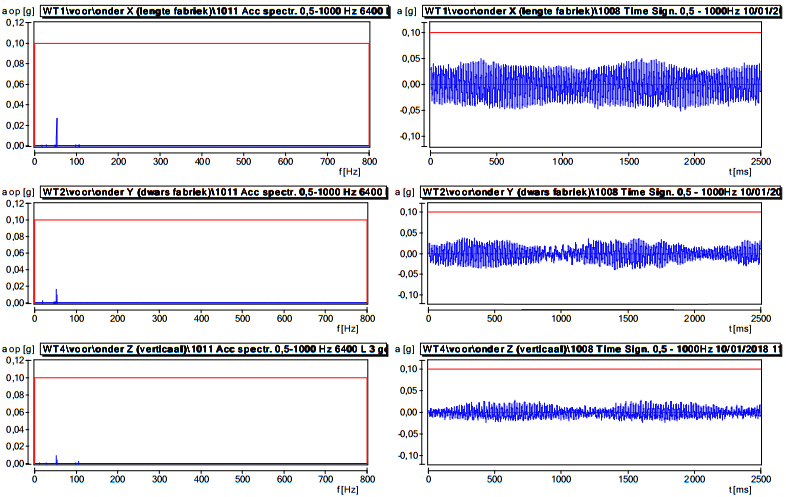
Vibrations are a common, yet often hidden, cause of an unstable weighing signal. They can originate from other machines, conveyors, motors, fans, or an insufficiently rigid support structure.
In particular, vibrations below 30 Hz and/or greater than 0.1 G can interfere with the measurement. The feeder then responds to movements from the environment rather than solely to the product mass.
What can you do?
Especially with microdosing, even a small vibration can have a relatively large impact on accuracy.
The way in which bulk material enters the feeder also affects dosing accuracy. A large drop height causes the product to fall into the feeder at a higher speed. This temporarily increases the force on the load cell and causes the system to take longer to return to stable measurement.
In addition, air is carried along toward the feeder. This extra air must be able to escape. If it cannot escape quickly enough, product may shoot out of the feeder outlet unintentionally.
Practical advice: preferably limit the drop height between the refill system and the feeder to 0.5 to 1 meter.
A short, controllable drop path stabilizes the process and shortens the stabilization time after refilling.
Aeration can help move difficult-to-flow bulk material out of a refill hopper. But excessive aeration has a downside: the product may temporarily begin to behave like a liquid.
In that case, the bulk material no longer flows in a controlled manner to the feeder but may surge forward. This disrupts the feeding process and reduces control over the material flow.
The correct approach: use only as much air as is necessary to achieve a stable product flow. Aeration is a tool, not a solution for an unsuitable hopper shape, insufficient outlet, or a product that is difficult to flow.
Air seems weightless, but with a sensitive gravimetric feeding system, that is a misconception. Drafts or air currents can push against or pull on the feeder. The resulting vertical force directly affects the weighing.
At high feed rates, this effect is usually limited. At low feed rates, however, the relative measurement error increases rapidly.
Guideline: Avoid airflows exceeding 0.3 m/s, especially in feeding applications below 1 kg per hour.
Therefore, check not only windows and doors, but also exhaust systems, air conditioning, fans, and air movements caused by nearby processes.
Pressure differentials in a process can literally push a feeder up or pull it down. Furthermore, flexible connections can become rigid due to overpressure or underpressure. As a result, they lose the very function they are designed to perform: flexible decoupling.
A rigid flexible connection can transmit forces to the load cell, thereby compromising dosing accuracy.
Practical limit: Avoid pressure differentials greater than 2 mbar.
In processes involving pressure differentials, pressure compensation at the feeder’s inlet and/or outlet is often necessary. The appropriate solution depends on the process configuration, the bulk material, and the desired feeding accuracy.
The electronics in a gravimetric feeding system also have clear operating limits. Outside these limits, reliability decreases, and the risk of malfunctions or inaccurate measurements increases.
Therefore, keep the following guidelines in mind:
This is a particularly important consideration in production environments with temperature fluctuations, wet cleaning, steam, or high humidity.
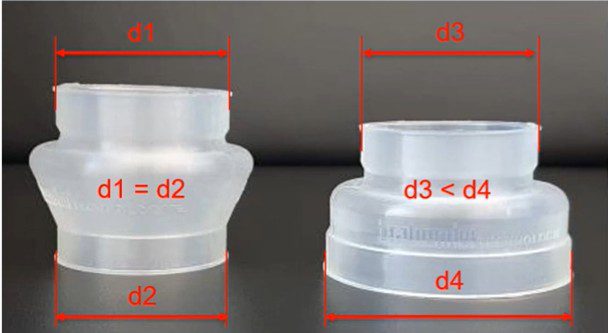
Flexible connections between the feeder and the rest of the system deserve extra attention. A flexible hose must be able to move freely. If it is under tension, if the distance between the connection points is too great, or if the centerlines deviate too much, tensile or compressive forces will be exerted on the feeder.
This leads to an incorrect load on the load cell and, consequently, to less accurate dosing.
Therefore, always check:
Those looking to improve feeding accuracy often turn first to software, settings, or a new machine. Occasionally that’s the correct approach. But in numerous instances, the greatest gains lie in the basics: a stable setup, a controllable product feed, stable air conditions, and properly installed hoses.
That is precisely where a Total Cost of Ownership approach makes the difference. By preventing disruptions in advance, you reduce product loss and downtime. At the same time, you increase production efficiency, the predictability of your process, and the system’s service life.
At SPS | Solids Process Solutions, we advise manufacturing companies early on regarding the feeding, extrusion, granulation, and inspection of bulk solids. We don’t rely on a single standard solution, but rather on a combination of your product, process, desired output, and quality objectives.
In that case, a targeted assessment of your setup is often the fastest route to a more stable process and better output.
More Info? SPS | Solids Process Solutions